BACKGROUND

As many of you know, Jodie was born with congenital heart defects and had surgery at 10 days and 18 months old. She did ok throughout childhood, but had to be on some medications through high school, then another was added in college. Jodie went on to grad school, and unexpectedly required a valve replacement in 2007. It turned out she was in the early stages of heart failure, but only found out after the procedure. She needed to get a pacemaker since her heart stopped beating on its own, and then a few months later upgraded to a pacemaker/ defibrillator due to low heart function. In 2008, Jodie was told that she would eventually need a heart transplant, and that the doctor predicted it to be necessary within the next 5 years.

In the 12+ years since then, Jodie was upgraded to a bi-ventricular pacemaker/defibrillator which helped her feel better but didn't improve her numbers, had it replaced two more times due to the battery almost running out (normal process), was put on a new medication that helped her feel much better but still didn't improve the numbers. Then in April of 2019 things started to get interesting. Jodie went into an atrial flutter and after 3 weeks, had to be cardioverted (think being shocked with paddles, but more controlled and while under anesthesia) to get her rhythm back to normal. Then over the summer she started feeling more and more tired, and having slightly worse symptoms. Jodie had some tests in August that showed things were worse, and the doctor told us in October that we would need to check back in early 2020 to see how things are. After having those tests, its clear that Jodie needs to have a heart transplant.


WHY DID WE START THIS BLOG?

Jodie and Peter decided to keep this blog for a few reasons. First, as a way to keep our friends and family up to date. Second, as a way to share how we are doing and what we are going through (and potentially what we need). Third, as a way to document this journey.

We have learned that we want the people around us, and those who care about us, to know what is going on, but don't always have the energy to talk about it over and over. We will be sharing was is "on our hearts" as we go through this journey. We welcome you to check in as often as you like. Thoughts and prayers are much appreciated. You are always welcome to reach out individually, but please feel free to leave comments on our posts and we will try to respond to everyone when we can. We are also planning to use this platform to share news when we don't have time or energy to send to everyone.

Some of our posts may be more emotional, and some may be about more mundane things. Once we get to step 4, it could take anywhere between 1 day and a year or more to reach step 5. We have no way to know. As we are in that waiting period, we do know that one of the things that will be helpful to us will be to keep busy - board game nights, movies, etc. If you are nearby, please do reach out. While Jodie can't be doing anything too strenuous right now, we still want to connect with people. If things come up that we need or could use help on, we may post it here, or reach out specifically to those who have let us know they want to help.

Thank you for walking with us through this journey as we share what is on our hearts. Please check back for updates. We will add information as it becomes available and as we go through the process ahead.

God bless,
Jodie & Peter Elliott

Sunday, March 8, 2020

We just got the call

12:06pm - we just got the call that they found me a heart. I'll post more later, but if everything goes well I'm getting a new heart tomorrow.

 { Addition} - we had gone to our Lutheran church this morning, then went to our Community church this afternoon.  We were chatting with people when we got the call, and were able to tell the folks who were still there.  Everyone was excited and there was a lot of praise, as we had been praying earlier for things to go smoothly.  They held an impromptu prayer circle, and then we were off to get home and do a few more things.  We are grateful to have such supportive faith communities, and it was really special to be with members of our small group when we got the news. 

Then we headed home and started calling/texting people.  One of my good friends came over to help finish a few more things, and another work colleague stopped by to grab some boxes that just got delivered and ended up helping to put in couch slip covers.  Our next door neighbors had agreed to take Stella during the day this week since we are having the contractor start tomorrow, and were happy to take her early.  Our across the street neighbors agreed to let in the contractor tomorrow so Peter can be here the whole time.  We are thankful to have such great neighbors and friends.Then it was time to head towards the hospital.  We realized that in the craziness, we did not eat lunch, so stopped and got a late lunch and then went to the hospital.

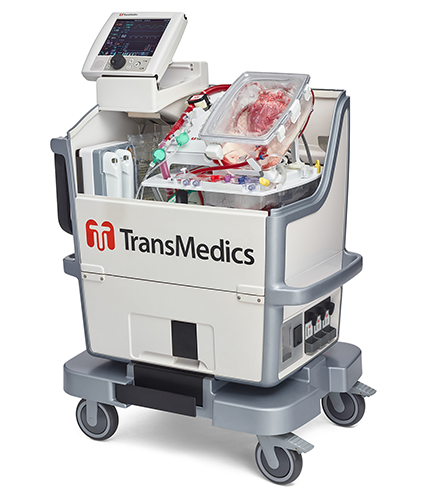
4:47pm - we are currently sitting in admissions at Duke Hospital and figured it was a good time to give an update. The donor is a 28yo male. I don't know from where exactly, but was told not in state but nearby. This will be a dcd heart, which means the donor is not technically brain dead. Tomorrow at 9:30am they are taking him to an OR, removing life support, and then have to wait 5 minutes before the surgical team can come in. If he passes quickly, and the surgeons can get the heart out within 30 minutes, then they will hook the heart up to the transmedic OCS (heart in a box) to get it pumping and do a really close inspection. If it looks good, which we should know by 11, then the surgery is a go. If not, it's a dry run. This heart is available because I signed up for the research study on Wednesday. It's crazy how quick this is! 

We are looking forward to getting upstairs and finding out more. Peter will be updating the blog when "big" things happen, but will most likely not have the bandwidth to be replying, although well wishes are welcome. Please pray that things go smoothly and pray for the family of the donor.

8:30pm - I got brought up to one of the cardiac inpatient floors.  They had given me a HUGE room, which would have been great if I had to be here for awhile.  After getting some vitals, I met the first nurse, who was really nice .  She ran through what needs to happen tonight, which was to figure out my INR  - the rate of how much your blood clots.  Because of my artificial mitral vale, I have to be on coumadin and keep my blood pretty thing to keep me safe from clots.  However, thing blood is not a good thing when you're having surgery.  So, they need to figure out how thin it is so they can figure out how much Vitamin K, the medicine that counteracts it, to give me.  Once they get my INR to a normal rate, then they will give me IV blood thinners (heparin) until the surgery.  Coumadin stays in your blood for days, while heparain is very short acting and only works while you'e getting it in the IV.

The transplant PA came in and I signed some consent forms.  I asked if the doctor would be willing to take a video of my new heart beating on the 'heart in a box', and get a photo of both my current and new hearts.  The PA texted the doctor, who said he will absolutely take the video of the new one, and will try to remember for the old one. Then the IV nurse was called to put in an IV  and draw some labs.  I ordered dinner, and then they came in and did an EKG.  Since I am sometimes a 'hard stick', the IV team brought an ultrasound and used that to find a good vein in the my middle arm.  They put in the IV, drew some blood, and then we had some downtime.  We have been trying to reach out to people, and I took the opportunity to call my Pastor from RI.  While I've had, and have, great Pastors, she is the one who I have most connected with, and I wanted to pray with her tonight.  It has been overwhelming and Peter and I wanted it to be just us, but being able to check in with her was really helpful.

They got back my blood test and figured out what they needed to do.  I was given a IV diuretic as I'm holding on water weight and they want to get it off, and then the Vitamin K.  While they were finishing, I updated my advance directive and started updating the blog. The IV just finished, and now I need to do a chlorohexidine wash.  This is a chemical wash cloth that will help to get rid of germs for tomorrow - I'll do once tonight, and and then do it again in the morning.  Then I have to wait for labs to be drawn at 11pm.  After that I can try to get as much sleep as possible before.  As of right now it is 10pm.

The plan tomorrow is that Peter will update the blog as the big things happen - so when I'm taken back, when they start, etc.  So keep on reading, and we appreciate your understanding of us being slow in responses.

Prayerfully yours,
Jodie and Peter

Saturday, March 7, 2020

A very busy 40ish hours

Yesterday after finding out about needing to go into the hospital tomorrow, Peter and I made a list of the things we were hoping to get done before I went into the hospital, and started to prioritize.  On the list earlier in the week had been a trip to Ikea today, which is 2+ hours away, to get storage stuff for my craft room.  The goal was to have it be a little less cluttered so it would be a comfortable spare room if someone needed to use the Murphy bed in there.  Due to time constraints, we decided that was not super important.

Yesterday night after the contractor left, I started a load of laundry for the guest bath and our dirty towels.  Then we went to Old Navy where I bought some clothes that will be comfortable in the hospital.  Once I have the transplant, I will be on a steroid that will most likely make me gain a little weight, so I wanted to make sure I had some clothes that would be easy to put on and will still fit even if I do gain a bit.  I got some comfortable pants, some tank tops, and some button up tops.  When you are in the hospital for a heart issue, you are constantly hooked up to telemetry.  This is a portable EKG, which gives the nurses a constant view of how your heart rhythm is doing.  If something goes wrong the nurses see it in real time and can come help.  This means there are stickers with metal nodes on them that the wires can connect to, and all the wires go into a box.  It can vary in size.  Usually (at least as of my last hospitalization), they rip a hole in the hospital gown near the front pocket so the wires can come through and you can put the telemetry box in the pocket.  I decided to get some button up shirts that (in theory) I could run the wires through one of the gaps between buttons and put the box in the pocket (if it is small enough).  Once I have surgery I don't mind being in a hospital gown, but if I'm just staying there and will be in for awhile, I would rather be in comfortable clothes.  I also don't want to worry about if anything gets dirty/stained/ruined, so none of these clothes are ones I would be sad if something happened to.

Then we got dinner, followed by a Target run for some items that would allow us to meal prep (glass containers), lots of pet supplies so our friends helping out won't need to worry about it, some blankets for our bed since the quilt is not done yet and that allows us to put our current comforter in a guest room.  After getting home, we were able to get two more loads of laundry through the washer, including all the new clothes.  We headed to bed knowing it would be a long, packed day today.

We both woke up fairly early, so got another load of laundry in, headed out to breakfast near our house, then hit up the farmers market.  After that we made a list, and picked up a few more things from Target, then went grocery shopping for meal prep and Peter for the week.  We realized in the morning there was more to do than we would be able to, so we decided that since so many friends have been offering to help, it made sense to reach out and see if they were free.  We had 4 friends come over, and we can't thank them enough.  With their help we cleaned and tidied up most of the house, including dusting/vacuuming, washing floors in most of the rooms, organized the spare rooms so they are ready for guests, done over 9 loads of laundry (including yesterday) including all the comforters and sheets for the guest rooms, all our dirty clothes, and the slip cover for our couch.  They also helped us completely clean the kitchen, the fridge, and our deep freezer, clear out things, and start meal prepping.  So far a pressure cooker worth of chicken noodle soup is done (11 containers), beef barley soup (10 containers) and the Italian wedding soup is in the pressure cooker. We are going to us some of the leftover veggies that didn't make it into soup to put into containers with either chicken or pork, and we can freeze them for easy meals.  With the glass containers that are oven, freezer, microwave safe, and dishwasher safe, it will give us a fair amount of time before we have to worry about cooking once I'm home.  It was also good to start doing what will be required for food prep - scrubbing all the vegetables, being really careful not to use anything rotten, and making sure to keep things clean.  I'm feeling confident that with planning we can do it, but it does take more time.

Now I'm relaxing as Peter is still switching loads of laundry.  Tonight we need to do our taxes, put away laundry, and hopefully pack so we don't have to in the morning.  I am quite tired and really startng to realize how limited I am, so I'm feeling more and more comfortable with needing to go in the hospital.  Hopefully I'll feel a bit better. 

We are going to go to sleep early since we "spring forward" tomorrow, then try to go to both church services, have lunch, and then head to the hospital.  We will keep you posted.  Once I am in the hospital, but before they find a heart, I will have a lot of time so may be posting a bit.  After the surgery it will probably take me awhile, but Peter will be posting updates.


Friday, March 6, 2020

Moving quickly into the unknown

Jodie: The last week I've been noticably more tired.  I was getting more tired at the end of the work day, but I did really think a lot of it.  Then we went to Columbus, and as I realized that I could not walk through the terminals because it made me too tired, I started thinking that maybe things were a little worse.  In the last week, I've needed naps (which I am never able to do unless I'm physically exhausted), I've been really winded from walks that normally don't bother me (like walking between two buildings), and I've needed more and more caffeine (tea or soda) to get through the day.  My cardiologist had said that if I was feeling different, I should reach out.  Last night I was talking to Peter and saying that I was hesitant to reach out because my guess was that the cardiologist would say I needed to go into the hospital.

Peter: Seeing Jodie pushing through this past week  has been difficult. When she got to the point that she wasn't sure whether or not she should reach out, we talked it through. While I don't want her going to the hospital with the possibility of staying indefinitely; I also don't want her safety or health to be compromised just because we were being stubborn. Her health is more important to me than my comfort, and I convinced her that she needed to reach out and trust that her doctors knew what would need to be done.

Jodie: This morning I sent an email to my doctor, and within an hour and a half he had responded saying that the wanted me to come into the hospital to be put on an IV medication that may help.  I replied asking if this meant I would be in the hospital until transplant.  He said that is the most likely possibility.  Going on this medication will move me to a level 3, and depending on how I respond he may want me to get a balloon pump, which would require being in the ICU but would move me to level 1.  There is a small chance that I could go home with an PICC line (an IV that is safe to have longer term) and the medication, but it is not as likely.  The nurse called me around 1pm and I have to be at the hospital on Sunday between 2 and 5pm.  So the rest of the day was spent with trying to tie up loose ends, and then I rushed home so we could figure out what our plan is for the weekend and to meet with the contractor, who is starting on Monday.

Peter: To some extent, it feels like we finished none of the things that we wanted to have done before she needed to go into the hospital. It was a bit of a shock to hear that Jodie would be expected to go in at the end of the weekend. Looking at things logically shows that we have more done than it feels like. The contractor for the bathroom will be starting on Monday, and should be done within 2 weeks. Our neighbors are willing and able to take care of Stella during this week. We have kept our family and friends informed of the situation. And we feel so supported and loved by everyone who follows the blog and keeps us afloat with kind words and prayers.


Thursday, March 5, 2020

Decreasing wait time


****Warning - this post talks about the process of retrieving a heart from a donor, and includes a graphic photo and a link to a graphic video.  If you are squeamish or this will be a hard topic for you, please wait for our next post.****

When we first met with the surgeon, he talked about how there were some research studies that could make my wait times much less.  He mentioned "dead donor hearts" and the "transmedic" device, and suggested we go to youtube and search "heart in a box, UCLA".  My regular heart failure cardiologist also mentioned these technologies and spoke highly of them.  My understanding was that there is a new technology that keeps the heart warm and beating while it is transported, and while it is approved in other countries it is still considered research in the US because it has not been fully approved by the FDA.  I was told that once I was listed, someone from the research team would talk with me to see if I wanted to sign up for this.

I got the call on Tuesday that they wanted to talk, and as luck would have it, I already had an appointment scheduled with my electrophysiologist (pacemaker cardiologist) for the next morning.  I agreed to come early to hear about the study.  Peter and I had watched the video and both thought that it seems to make sense, so I was interested to get more information and most likely planning to agree.

I sat down with the research coordinator, and it was cool because it turns out she is actually part of the process of when they go to retrieve a heart and helps with the machine.  The company who makes the machine is Transmedic, and the official name of it is Portable 'Organ Care System' or OCS. A picture of the system is below. The company website has a great video that shows the machine in action, keeping a heart pumping.

https://www.transmedics.com/ocs-heart/?gclid=CjwKCAiA44LzBRB-EiwA-jJipCOfyTLQoib2bIecY76B2UOnVEfsG75W46G0twZY5WtHjFBJ01LriRoCodQQAvD_BwE

The OCS first was tested to see if keeping the heart beating and warm made more sense than putting it on ice.  When on ice, a heart can only last 4 hours before it is too injured to be used in a transplant.  With the OCS, which keeps its beating and warm, it greatly increases the time the heart can be out of the body.  The 500/250 mile limit on how far they normally look for donor hearts is because of this limitation with traditional transport methods.  Right now, 15 different hospitals around the country are signed up and are taking part in the research study to show that this is a reasonable way to transport hearts, and that the results are just as good.  Similiar studies in other countries have had just as good, if not better, results.  This means that for people who are signed up in the studies at those 15 hospitals, the geographic range they will look at is much, much bigger.

This does not mean that I get to 'jump the line'.  But think of it this way.  With having the OCS as an option, lets say that a heart becomes available in Wyoming.  They find the list of potential matches.  There may not be someone in that 500 or 250 mile radius who can use this heart.  Lets say there is someone who is close by but is a status 6, and I'm a status 4.  Because they could use the OCS, I could be offered it first (since I would be more severe).  Or, lets say that no one in that area can use it.  Normally, that heart would go unused.  Now, they can open up the range and if someone further out who is signed up in the study can use it, they can get it. This first study has closed and has great results, and they are going to submit for FDA approval of the device in April.

So for those reasons alone, I was excited about the study.  But then the research coordinator told me more about the machine.  Not only does it keep the heart beating, but it is taking readings and checking how the heart is doing.  If it starts to have problems, they can give it medications, adjust the flow rate, etc.  This means that there is a slightly higher risk of a 'dry run' as they may think a heart is good but once its in transport realize it is not as good as they thought, but these are things they have no way of knowing using the traditional method.

Because of these capabilities, the company started the EXPAND study to try to expand the pool of donor hearts.  Only a small percentage of people who are willing to donate a heart can actually do so based on a lot of factors, but mostly because there are the limitations to traditional transport.  Apparently, older hearts (over age 50) do not transport very well on ice, so even though those hearts could still have years on them, they often are rejected.  Sometimes a heart will have something about it that is not entirely perfect, like a slightly wider septum (middle heart wall) or something else like this, and traditionally they did not have a way to see if the heart would work as well so would not use it.  Now, with the OCS, they can get more information during transport to know if it has a good chance of working.  It also means that these hearts can be considered for people who may usually wait a really long time, or who are older, or who really need a heart right away.  Since only 15 hospitals are a part of this, that means that this expanded pool is only open right now to people who are signed up for the study.  The goal is to show that these hearts can have similar results to the traditionally used ones, to where it would increase the overall pool.  But in the meantime, I am eligible to be considered for these hearts.  The doctors are still going to be really picky about what hearts they will use, but it does open up possibilities.

And if that wasn't enough, a new study opened in November called the Donors from Circulation Death (DCD) Trial.  Traditionally, hearts are only eligible to be retrieved if the donor is brain dead.  The surgical team would come in once the family has decided to pull the plug, and they would stop the heart and retrieve it in the operating room (OR).  For most organs from deceased donors, they can be retrieved up to a few hours after the heart stops and still be viable.  Hearts are typically only viable for up to 30 minutes after life support is removed.  In this study, they are expanding the pool of donor hearts again by considering donors who have a life-threatening injury, but are not technically brain dead (which is a really strict process to call someone that).  If the families agree that they want to donate the organ, they would pull the plug in the OR and the surgery team would be on standby.  If it takes less than 30 minutes for the donor's heart to stop beating, then it could be eligible for transplant with this study.  The research coordinator said that these hearts tend to be from younger donors.  Once again, only people signed up for this research study have access to these hearts.  Peter and I decided to sign up, and I was randomized to the group that has access to them (it was a 50/50 chance).

So what does this all mean?  I have no idea right now what heart I will get.  But in addition to the traditional pool, I will have access to being considered for the EXPAND and the DCD trial hearts, so it may not take as long to find a march.  My transplant surgeons will decide if the heart seems like it will be a good fit, and when I get the call to offer me one I will get to know the age of the donor, the rough area they are in, and some details.  If it is an EXPAND or DCD heart, after I get that information I can decide if it sounds good enough, or if I want to wait for more of a traditional heart.  Since I was told I would need a transplant 13 years ago, my worst fear was getting sicker and sicker on the list and dying before they can find me a heart.  Signing up for these studies makes me feel a lot better about having a successful transplant.

I'm also excited to be able to have my experience help advance science.  Regardless of which type of heart I get, information about my outcomes will help to determine if this technology is safe and effective.  If it is, some scientists have calculated that this could increase the number of available hearts around the country by 30%!  It would be amazing if people who are in my shoes in the future don't have to worry as much about having a heart become available.

I'm sorry if this post sounds clinical or insensitive.  I am very aware that in order for this to happen for me, someone's family is going to have to go through a tragedy.  One common misconception about organ donation is that they don't work as hard if you are a donor.  This is NOT true at all.  As you can see, it is only once it is clear that a person is not going to be able to survive that they consider this.  I pray for the donor families, and hope that they are able to find comfort in the idea that their loved one is able to do good even after they are gone, and that a part of them is living on.


Wednesday, March 4, 2020

There's a method to allocation

Many people have asked us questions about how they decide who gets which heart.  The United Organ Sharing Network (UNOS) changed the rules about how people are listed for transplant a few years ago to help people get listed sooner, and hopefully decrease the number of people waiting on the list who either get too sick for transplant or die waiting for an organ. In the old system there were three classifications - 1a, 1b, and 2, and it had much more stringent criteria to get on the list (you had to be really sick).  With the new system, there are 7 classifications and you can get listed sooner (but still have to be sick).

For all the levels, when UNOS gets the notification that there is a heart available, they are going to look in the system; taking into consideration things like blood type, weight/height, and other immune markers.  This will give them a list of all the people who the heart would be the best match for.  They will then look locally and try to match to the person who has the highest level and has been waiting longest.  If there is no one in the highest level, then they start looking at lower levels. Once you are on the list, you start accruing time.  Time you accruing at a higher level counts if you move to a lower level, but time at a lower level does not count towards the higher.  The time is cumulative overall.

Level 1 - You are living in the hospital connected to a device that is either making your both of the chambers of the heart beat, are connected to machines that can oxygenate and pump your blood for you (ECMO), or have a life-threatening arrythmia (issue with heart rhythm). 
Level 2 - You are living in the hospital and are connected to a device that is making the left side of your heart beat (LVAD), or have a balloon pump, or are having arrythmia's that could be life-threatening but aren't all the time, or need a mechanical ciculation device that is failing
Level 3 - You are living in the hospital. You have one of the devices from level 1 or 2 but have been doing ok on them for a period of time, or need to be on IV medications that you can only get in the hospital, or you have a mechanical circulation device that is having a problem (but not failing)
Level 4 - You can live at home.  You need IV meds but can have them at home, or you have congentital heart disease, or a few other serious conditions, or you need a re-transplant.  This is the status I am currently listed at
Level 5 - You are on the waitlist for a heart and at least one other organ at the same hospital
Level 6 - All other active candidates
Level 7 - This is the "inactive" category that people go into temporarily when they are too sick to have the surgery, if they travel further than 4 hours away, or is something else makes it so they are temporarily unable to accept a heart.

In levels 1 and 2 UNOS considers organs within 500 miles from your listing hospital, while in the other levels they consider organs within 250 mile.   If you want info from UNOS about how this works, a good link is https://transplantliving.org/organ-facts/heart/heart-faq/

I signed up for a few research studies working on ways to transport hearts that is approved in other countries, and that is actually going to greatly increase the pool of donor hearts for me. I'll be posting about these research studies tomorrow, but as a warning it will have a link to a slightly graphic video and will have information about how they procure the hearts that will go into a fair amount of detail.  If you are squeamish or don't want to know that much, I would suggest foregoing tomorrow's post.

Tuesday, March 3, 2020

Keeping busy


As mentioned in an earlier post, one of the things that we have on our "must do" list before transplant is to renovate our bathroom.

Jodie: The current shower is dated, hard to clean, and we suspect there may be mold behind the tiles.  This is not ideal for a lot of reasons, but would be a bigger problem once I'm immunosuppressed.  We have been talking about re-doing the bathroom since the fall.  The plan is to remove the current tiles and tub, replace the walls behind (including any of the wood framing that does not look good), and then put in a tile shower with a bench.  We are also going to be switching the shower to a combo shower head and handheld wand set-up.  The idea is to not only make the bathroom cleaner, but it will be more functional for me, especially after surgery.  Having a place to sit and a handheld shower wand will help with being able to keep myself clean.  The shower will be easier to walk into than a tub.  And including some grab bars will keep it safe.  Peter has really taken the lead, and I'm excited that he found someone who can start right away.

Peter: The tiles we bought at the Habitat ReStore months ago have been sitting in our kitchen for long enough that we started using the stack as a shelf. Its past time we got started with the project, so its great that we finally seem to have a path forward that doesn't require me to be the one to lay the tile. I can do it, and I have done it before, but it sucked [Jodie here - I really enjoyed it! We quilted a wall!] I think the end product looked good, but its definitely one of those things where I would happily pay for someone else to do it if its financially reasonable. I sketched out roughly what we want to accomplish for the contractor, hopefully it turns out better than I drew it.

Jodie: I'm really, really relieved that the contractor can start next week Monday.  We ordered the shower fixture yesterday, went to Lowe's and got tile for the shower floor that matches the wall tile Peter previously found at the Habitat ReStore.  We also started looking at other fixtures and bathroom accessories for later.  Right now we are focusing on the shower and floor, but the overall plan will be to eventually replace the vanity, light fixtures, other bathroom fixtures, and paint.  Normally we would just DIY everything, but it's good to know that the hardest parts, which would take us a long time to do, should be done in two weeks. Even if I were to get the call that they have a heart for me really soon, there should be time for this to get finished either before I get home or soon after.


Peter: Definitely looking forward to this being done and then we can worry about other house projects! After this is done, we need to get shower doors (considering ordering through Lowe's since they can include installation), and build out a pantry off the kitchen. If we like the work for the bathroom, we may use the same person for this. It will be a smaller project, but I'm really looking forward to that one being done. The idea will be to split the "formal dining room" (that we don't need because we have two dining rooms) into a large pantry to enter through the kitchen, a small office to enter through the entry hall, and a coat closet within the new office. Technically, once we add a door, this will be considered an additional bedroom since it will have windows, door, and closet.

I am coming to realize the importance of keeping ourselves busy to not settle into stressful thoughts about the uncertainties of the future. This is part of why I am taking the lead with the bathroom work at this time, it feels good to be able to focus on something with visible results and a clear end in sight. After these couple of house projects, I'm not sure what I'm going to need to use to productively occupy my down time... maybe I'll pick up a programming language, maybe I'll pick up boat building, maybe I'll pick something I haven't thought of yet. Regardless of what I choose, I know I will need something... if anyone has ideas, let me know.

Sunday, March 1, 2020

The rocky road that led to many blessings

We went to church with Peter's family this morning - Sarah, Mark, Leah and Mason, and Catherine and her boyfriend Travis.  The sermon theme was about suffering and tragedy - and finding the good news within it. The pastor did a good job at looking at this broadly, and giving enough so you could come to your own conclusions.  This made me think about how suffering, on different levels, has played out in my life.

I don't usually think of having to deal with my heart condition as suffering or tragedy, but some times it has been. One of the things that is hard about suffering is that it is often hard to discern the reason. Yet my 'suffering' had very much led to blessings in my life. Being somewhat restricted as a child and getting tired more easily made me fight for the ability to do things and appreciate them. As I got older, it brought me more empathy and a maturity that developed years earlier than it may have otherwise. When I was in grad school and went into heart failure, this felt like a tragedy. However, I can see now that I was meant to be a social worker, to help others with chronic conditions, and this tragedy changed my life trajectory and both put me where I needed to be and gave me the ability to slow down and really understand loss of health and changing plans. 

This trip has been helpful for a few reasons. First, I've loved meeting and cuddling Mason and seeing the Elliott clan.  The blessings of this family accepting and loving me as much as my own is indescribable. This trip has also really showed me how limited I am. I think even though I've known I need this transplant, in my regular life I've been making changes so day to day I don't feel the effects. While logically I knew, I don't think deep down I really let myself believe it in some ways. I feel like now I know. Traveling has really shown me how much my energy and ability is affected. I'm glad we were able to come on this trip, but I am also feeling ready to be home and be on the waitlist. Next time we travel I'm looking forward to it being easier. Overall I may not know what my life holds or what God has planned, but I believe that whatever suffering has happened and is to come will lead me right where I'm meant to be.

One month post transplant!

Wow.  It is almost unbelievable that it has been one month since the transplant.  So much has happened, with two weeks in the hospital, and ...